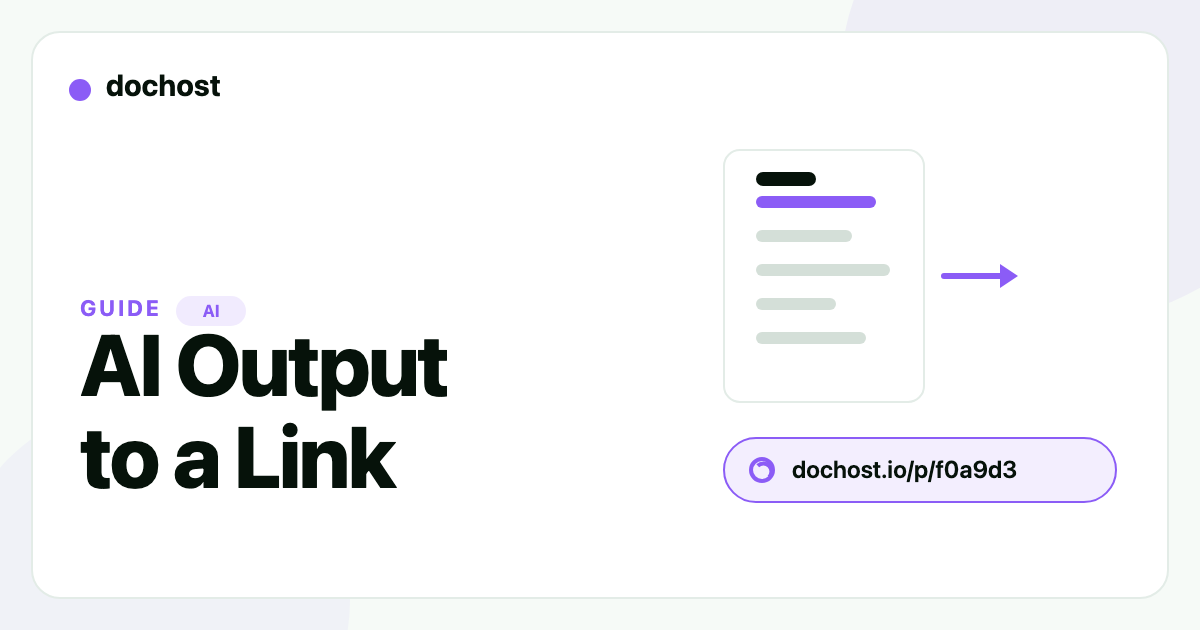
Turn Any AI Output Into a Shareable Link
Every AI tool leaves you with output trapped in a chat window. Here's the neutral step that turns it into one clean link for your team or client.
Every AI tool ends the same way: a block of output trapped in a chat window. Whether it came from ChatGPT, Claude, Gemini, or a coding assistant, the moment you want a second person to see it you hit the same wall. This is about the neutral step in between — turning AI output into a link you can send.
The three bad options
When you want to share an AI result, the defaults all fall short:
- Screenshot it — loses the selectable text, gets cut off after a few lines, looks bad on a phone.
- Forward the whole chat — overshares earlier prompts and unrelated context, and the reader has to hunt for the part that matters.
- Paste it into a doc — strips or mangles the formatting that made the output useful.
The neutral step: paste, link, send
Instead, paste the output into the AI output to link tool and get one URL that shows just that result, cleanly rendered, with nothing else from the conversation attached.
- It works with any model. The page doesn't care whether ChatGPT, Claude, Gemini, Copilot, or a local model produced the text — the input is just HTML or Markdown.
- HTML renders as the page it describes; Markdown renders with headings, lists, tables, and code. Plain text shows as plain text.
- The link is read-only and scrollable — real text that reads well on any screen, unlike a screenshot.
A real example
A marketer uses an AI tool to generate a first-draft FAQ — about twenty Q&A pairs in Markdown. They want their PM and a support lead to review it before it goes live. A screenshot cuts off after five questions; sharing the whole chat exposes unrelated prompts; pasting into a doc strips the formatting. Instead they paste the output, get a link, and post it in a review channel: "Draft FAQ for the export feature — flag anything inaccurate by Friday." Two people open the same rendered page and comment in the thread. The AI output went from a private chat to a reviewable artifact in about ten seconds.
When you know the source format
If your output is specifically from one tool, the focused guides go deeper:
- Share ChatGPT HTML — for full HTML pages ChatGPT writes.
- Share Claude Markdown — for structured Markdown from Claude.
- HTML to URL and Markdown to HTML — the general convert-and-host versions.
Keep the link around
Free links last 7 days, with or without an account, which suits most review cycles. To keep an output online permanently or put it on your own domain, see pricing.
Bottom line: stop screenshotting and oversharing chats. Turn the AI output into one clean link and send exactly the thing you want reviewed.
More Posts
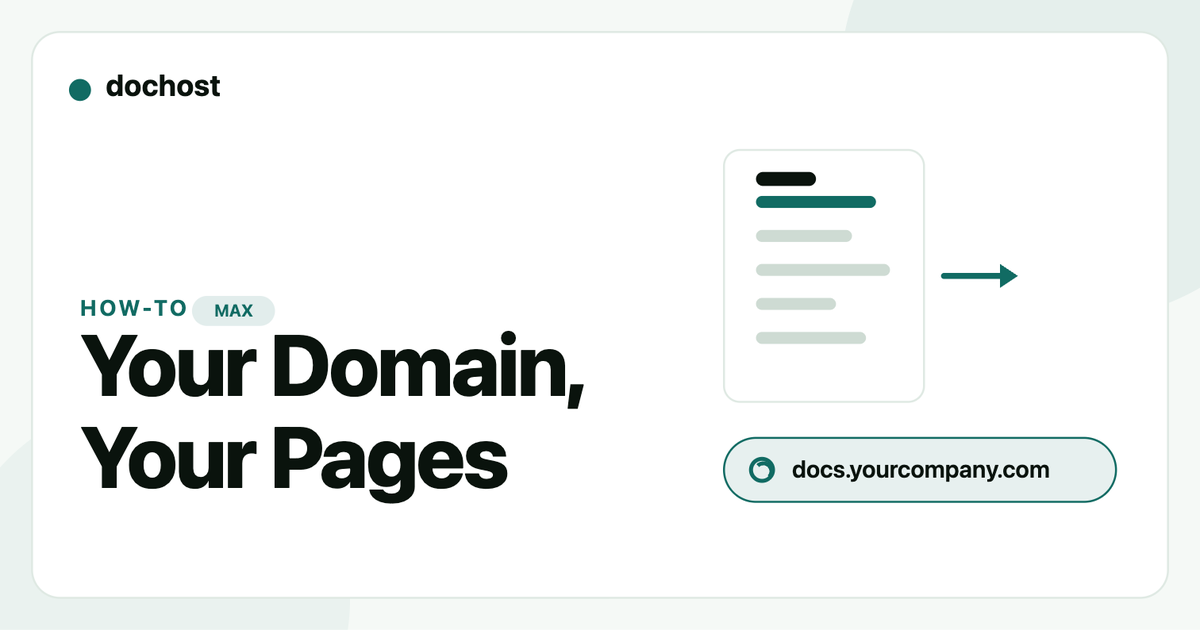
How to Serve Your dochost Pages From Your Own Domain
Connect a subdomain you own, like docs.yourcompany.com, to your dochost account in three steps — one form, one CNAME record, one email. With screenshots, including the single Cloudflare setting that trips most people up.
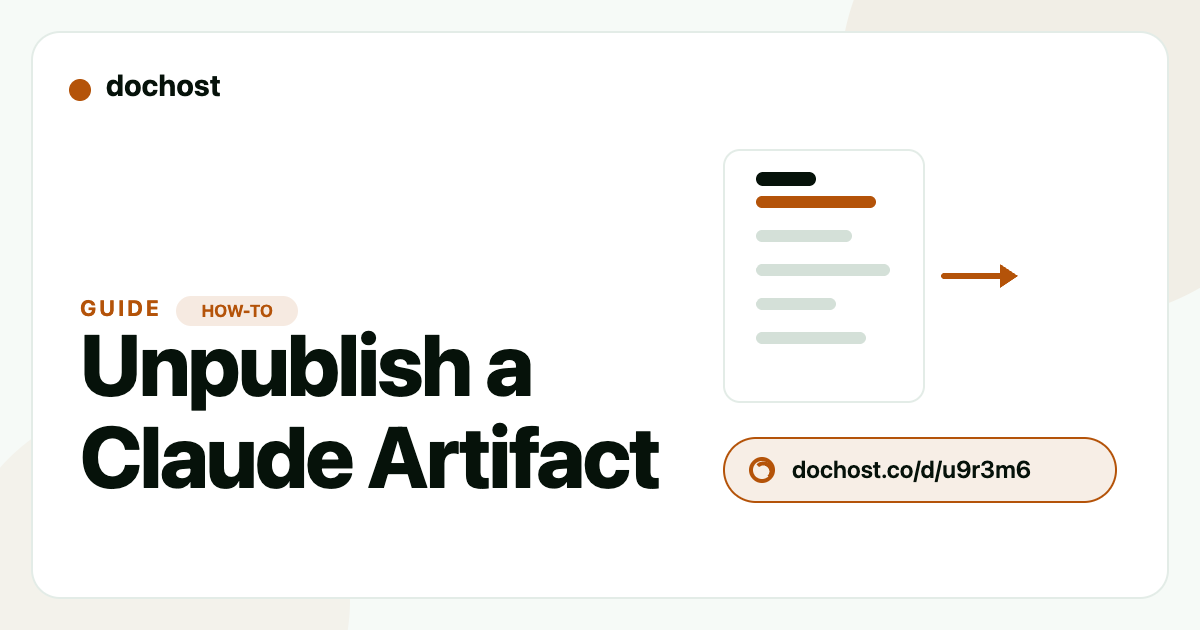
How to Unpublish a Claude Artifact — and Why You Only Get One Shot
Open the artifact, click Share or Published at its top right, then Unpublish. It's permanent: that artifact can't be republished and its stored data is deleted.
How to Share the HTML ChatGPT Writes (Without Saving a File)
ChatGPT writes you a full HTML page, but it's stuck in the chat as code. Here's how to turn it into a link your team or client can open.
Newsletter
Join the community
Subscribe to our newsletter for the latest news and updates